
Complex Case File #002
Challenging an HMO Licence Requirement
When an HMO licence renewal proposed a condition we couldn't simply ignore.
The Challenge
Our Approach
The Outcome
A council proposed requiring ten additional hand wash basins to be installed across two established eight-bedroom HMOs.
Rather than simply accepting the requirement — or rejecting it because we didn't like it — we went back to the legislation, the council's published amenity standards, the existing facilities, the practical implications of the proposed works and, importantly, the views of the tenants living in the properties.
Following formal representations and further discussions with the council, the requirement for the additional bedroom hand wash basins was removed. Instead, the existing ground-floor WC was converted into an additional communal shower room.
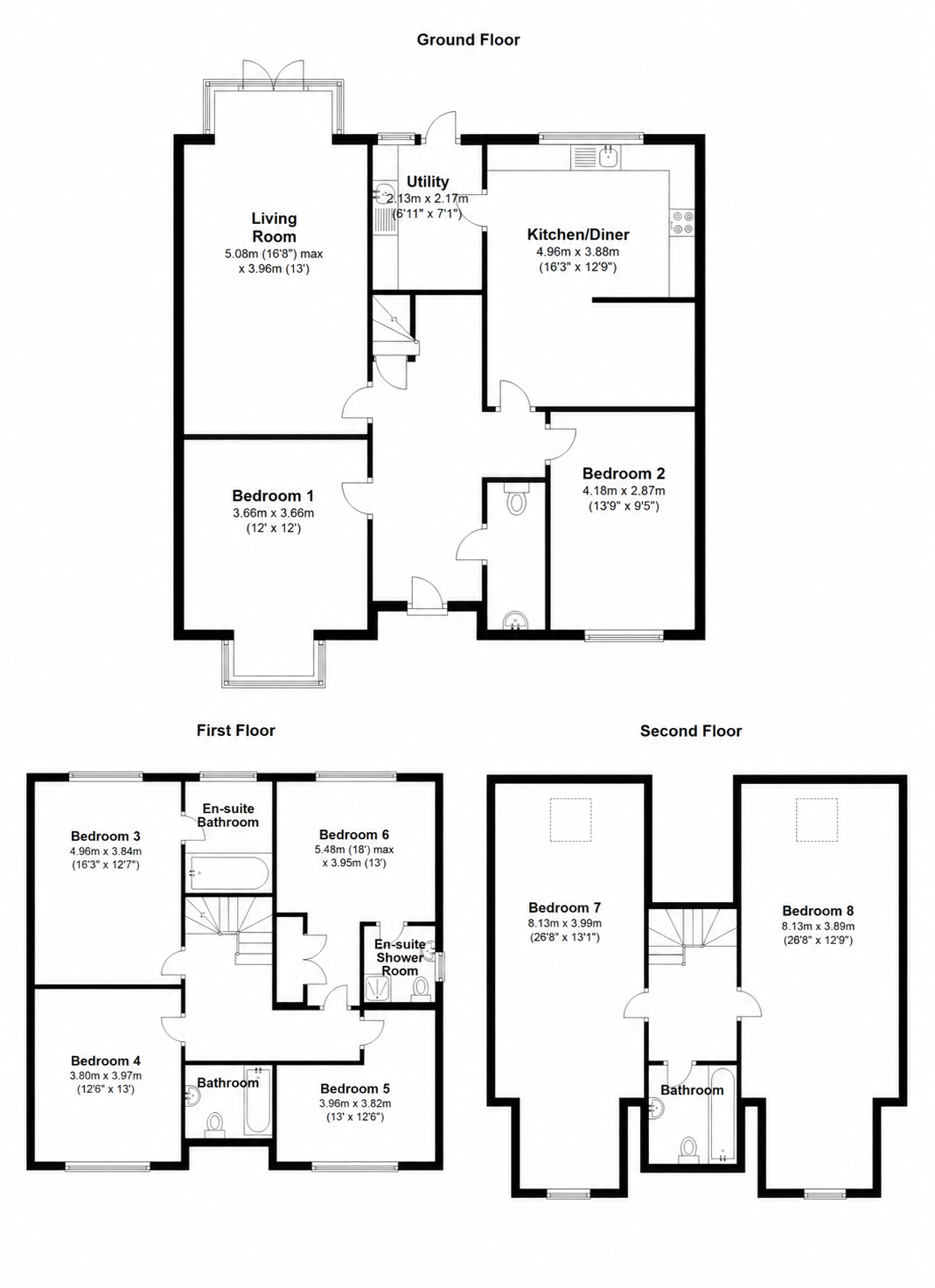
The existing layout provided two ensuite bedrooms, two communal bathrooms and a separate WC
The Background
These two HMOs had already been operating for more than ten years before we took over their management.
When their HMO licences came up for renewal in 2019, the properties were inspected as part of the renewal process.
The properties were both eight-bedroom HMOs, with two ensuite bedrooms, two communal bathrooms and a separate ground-floor WC.
The properties had previously been licensed without a requirement for hand wash basins to be installed in the bedrooms.
Following the renewal process, however, the council's management team decided that additional wash hand basins should be installed in five of the bedrooms at each property.
The council's letter explained that the proposed condition was being made under the Licensing and Management of Houses in Multiple Occupation (Additional Provisions) (England) Regulations 2007.
The relevant provision referred to hand wash basins being provided in every living accommodation “where reasonably practicable”, having regard to factors including the age and character of the HMO, its size and layout, and its existing provision of hand wash basins, toilets and bathrooms.
We were given the opportunity to make a formal representation before the proposed conditions were added to the final licences.
And this was where the question became more interesting.
Was the additional provision actually necessary and reasonably practicable in these particular properties?
We didn't challenge the council simply because we didn't like the idea
There is an important distinction here.
An HMO landlord can't simply say:
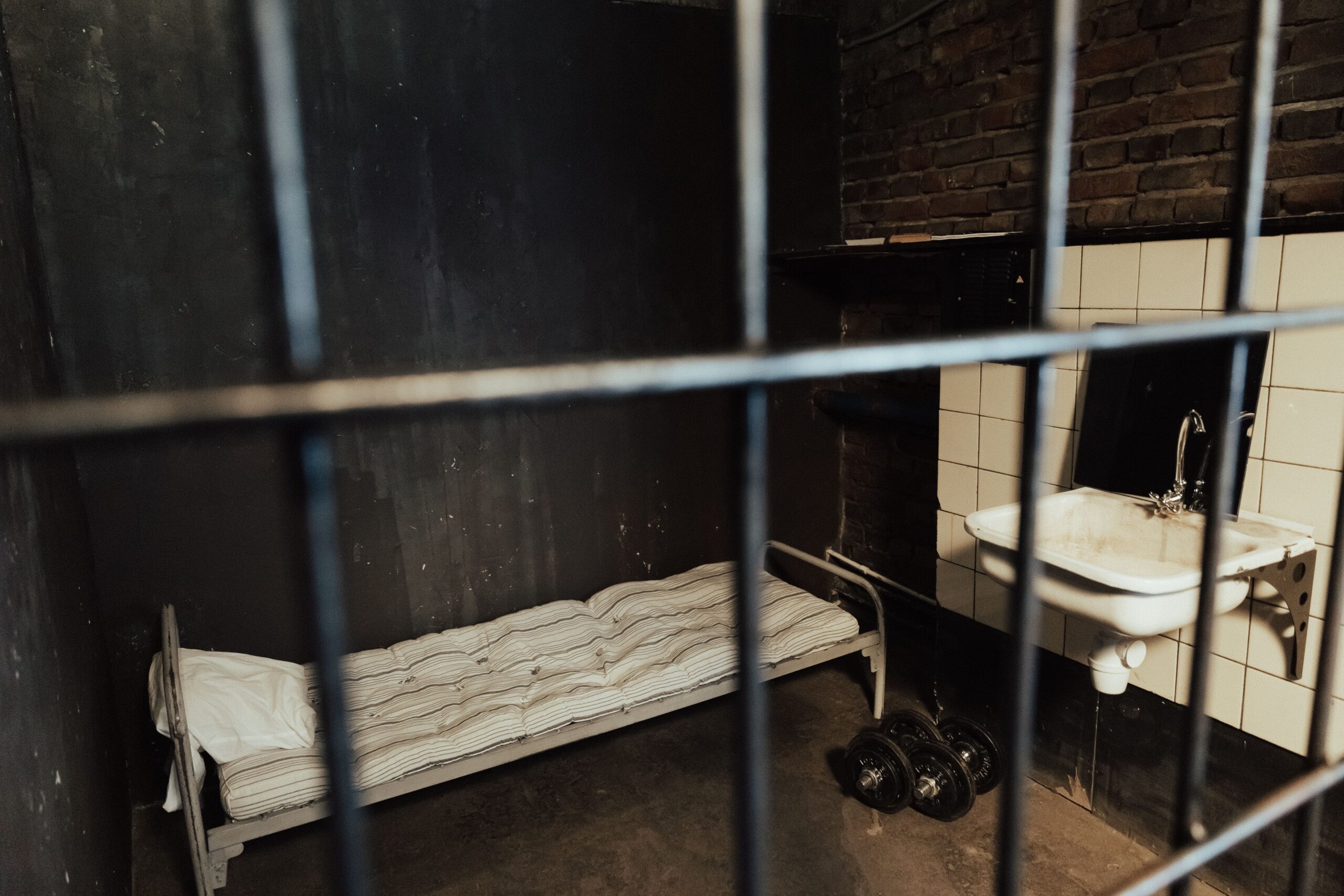
“Basins in the bedrooms will make the HMO look like prison cells!.”
Their personal opinion isn't the legal test.
Our starting point was therefore to go back to the relevant standards and understand exactly what the council was requiring and why.
The existing facilities were already substantial.
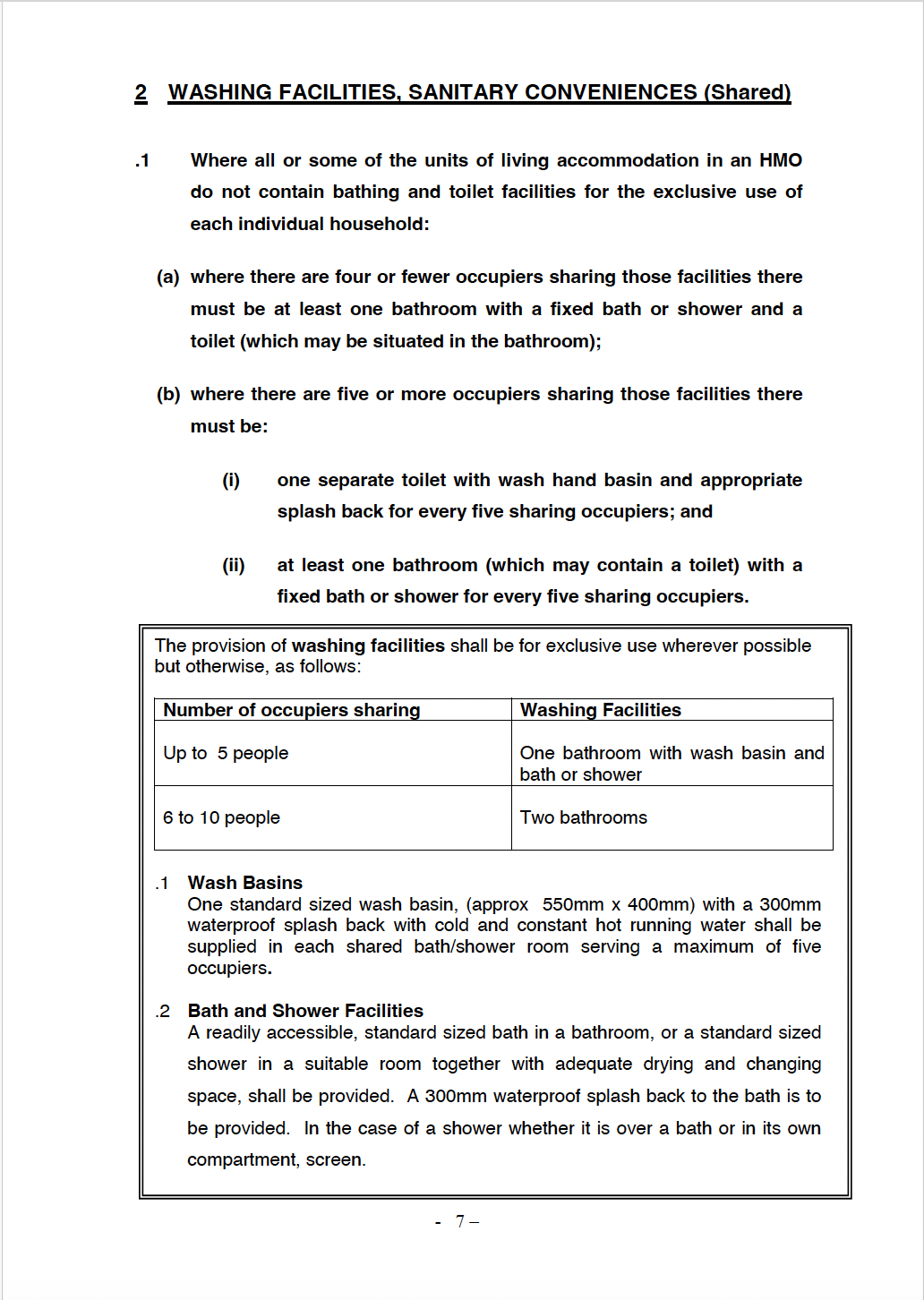
The two communal bathrooms were being shared by six of the eight bedrooms.
In our representation, we pointed out that the council's own standards considered two shared bathrooms suitable for up to ten people, meaning that the six occupants sharing the facilities were already being provided with considerably more bathing provision than that ratio required.
The council had also acknowledged that the existing ground-floor toilet and hand wash basin were already additional to its requirements.
We therefore questioned why five additional hand wash basins in each house were necessary.
The published amenity standards set out the minimum provision expected for bathing facilities.
We then looked at what the work would actually involve
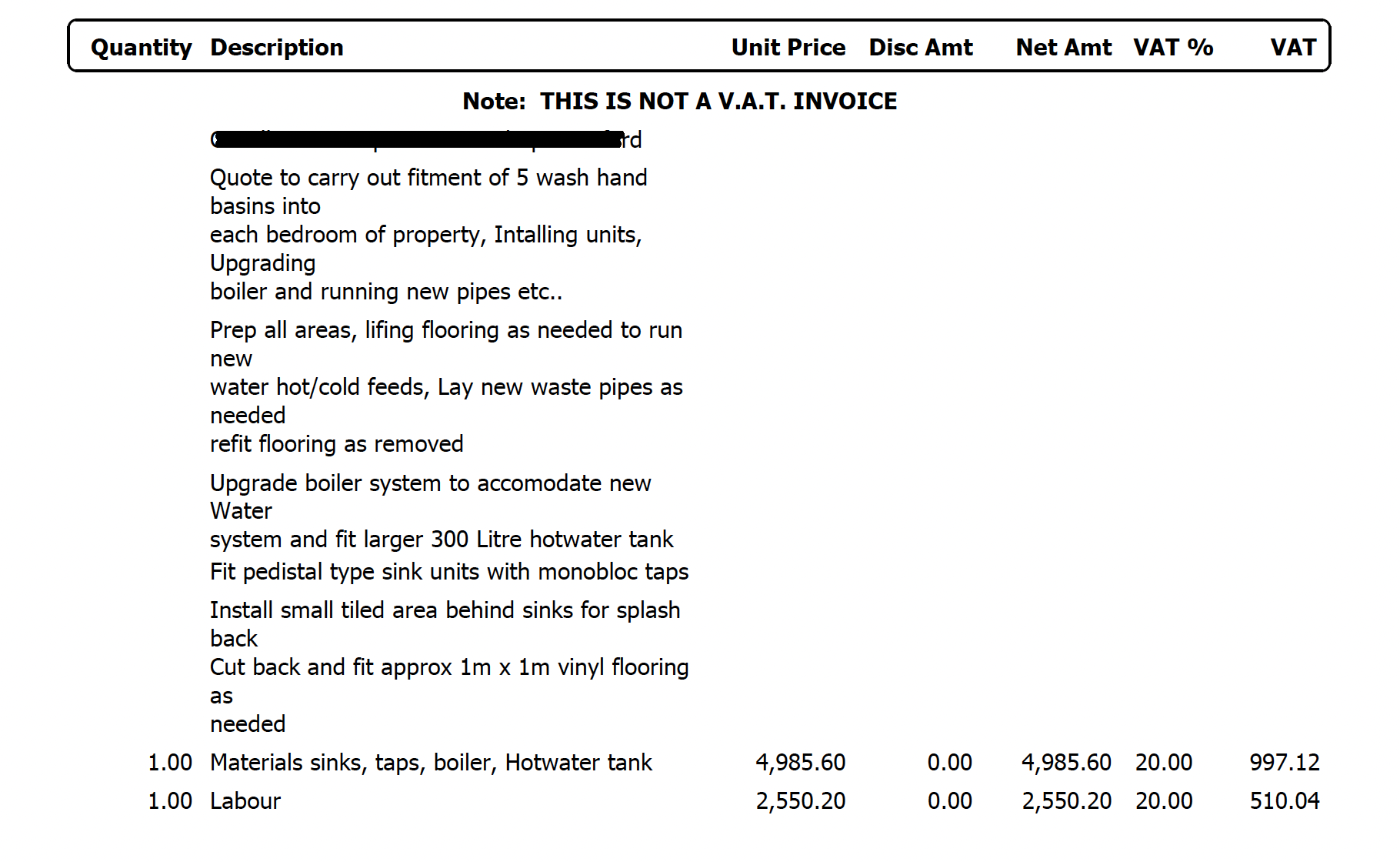
The council asked us to obtain a quotation for the proposed works.
We did.
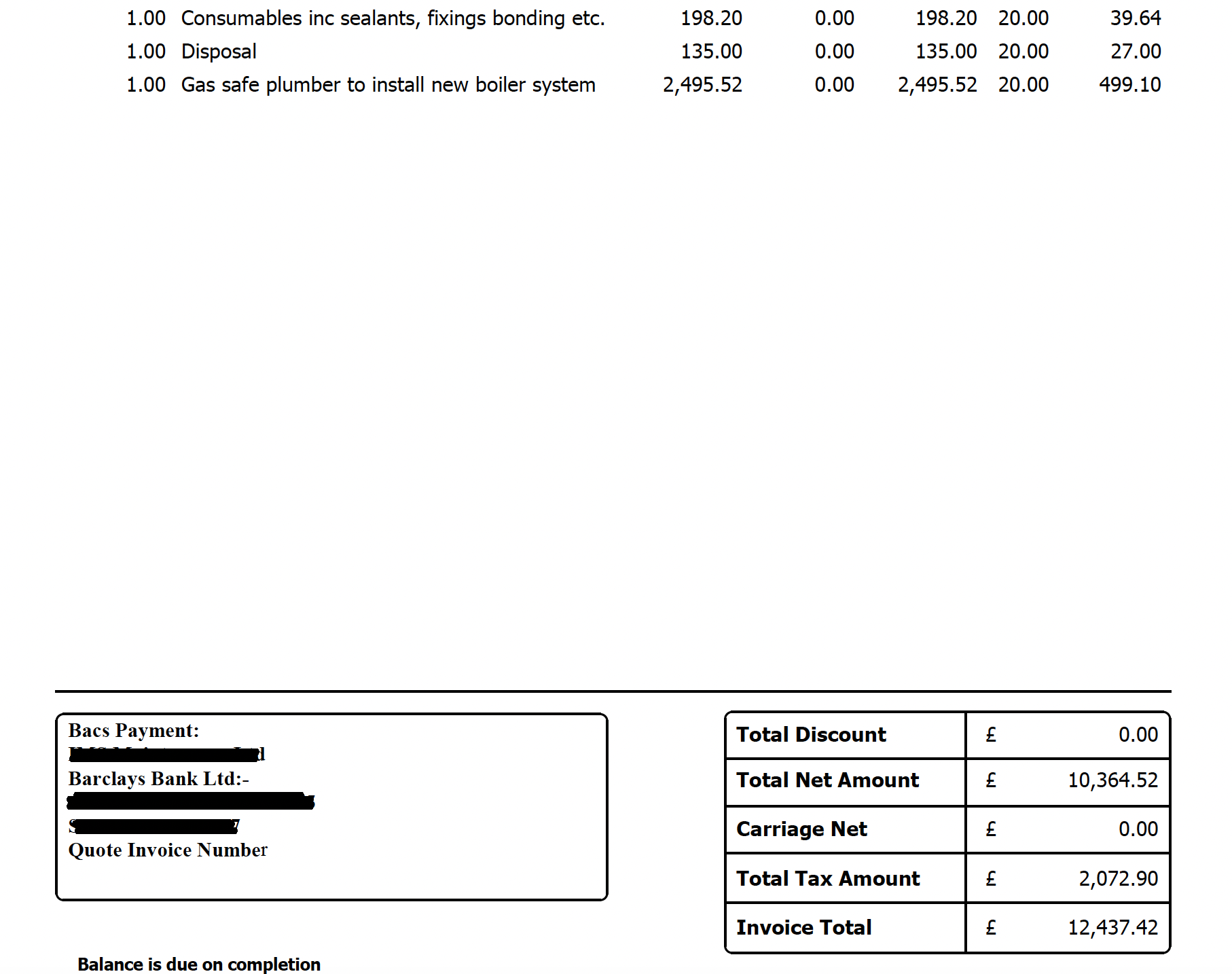
The quotation from our maintenance contractor came to £12,437.42 for each property.
And the works were considerably more involved than simply installing five basins.
They required associated plumbing works, new hot and cold water feeds and waste pipes, alterations to flooring and an upgraded boiler and larger hot-water storage tank.
There was also the practical reality of carrying out substantial works inside occupied bedrooms.
The contractor's quotation was based on completing the work at one point in time. The council had indicated that the works could potentially be completed incrementally as rooms became vacant, but we highlighted that this would be likely to increase the overall cost.
So the question wasn't simply:
“Would it be possible to install five hand wash basins?”
Of course it would.
The more relevant question was whether doing so was reasonably practicable and proportionate in the circumstances of these particular HMOs.
We also listened to the people actually living there
The council had indicated that the views of the tenants would be taken into account.
So we asked them.
The response was remarkably consistent.
The tenants did not consider the existing communal facilities inadequate.
They raised concerns about the loss of bedroom space, potential water and maintenance issues, disruption during the works and the effect that installing a basin alone would have on the character and desirability of the bedrooms.
Several tenants said that they would consider leaving the property if the basins were made a requirement.
One tenant had only recently moved into the property and said that, had they known a bedroom basin was going to be installed, they would not have chosen to rent the room.
Another had lived in the property for around ten years and said they had never experienced a problem with the existing communal facilities.
We therefore included written objections from tenants living in both properties as part of our formal representation.
Making the formal representation
Our first step was to question the requirement with the council.
When we couldn't reach agreement with the inspector, we used the formal representation process available to us.
Our second representation brought together the evidence we had gathered.
We addressed:
- the existing provision of bathrooms and hand wash basins;
- the council's own published amenity standards;
- the historical licensing of the properties;
- the wording of the relevant legislation;
- the practicality and cost of the proposed works;
- the disruption that would be caused to occupied properties;
- and the views of the tenants.
We also proposed an alternative.
Rather than installing five additional hand wash basins into bedrooms, we suggested converting the existing ground-floor WC into a third communal shower room.
This would provide an additional bathing facility for the house as a whole, rather than introducing individual hand wash basins into five bedrooms.
It was a solution we felt would provide better amenity for the tenants and add value to the property, while avoiding the significant disruption and cost associated with installing the five bedroom basins.
Our proposed solution:
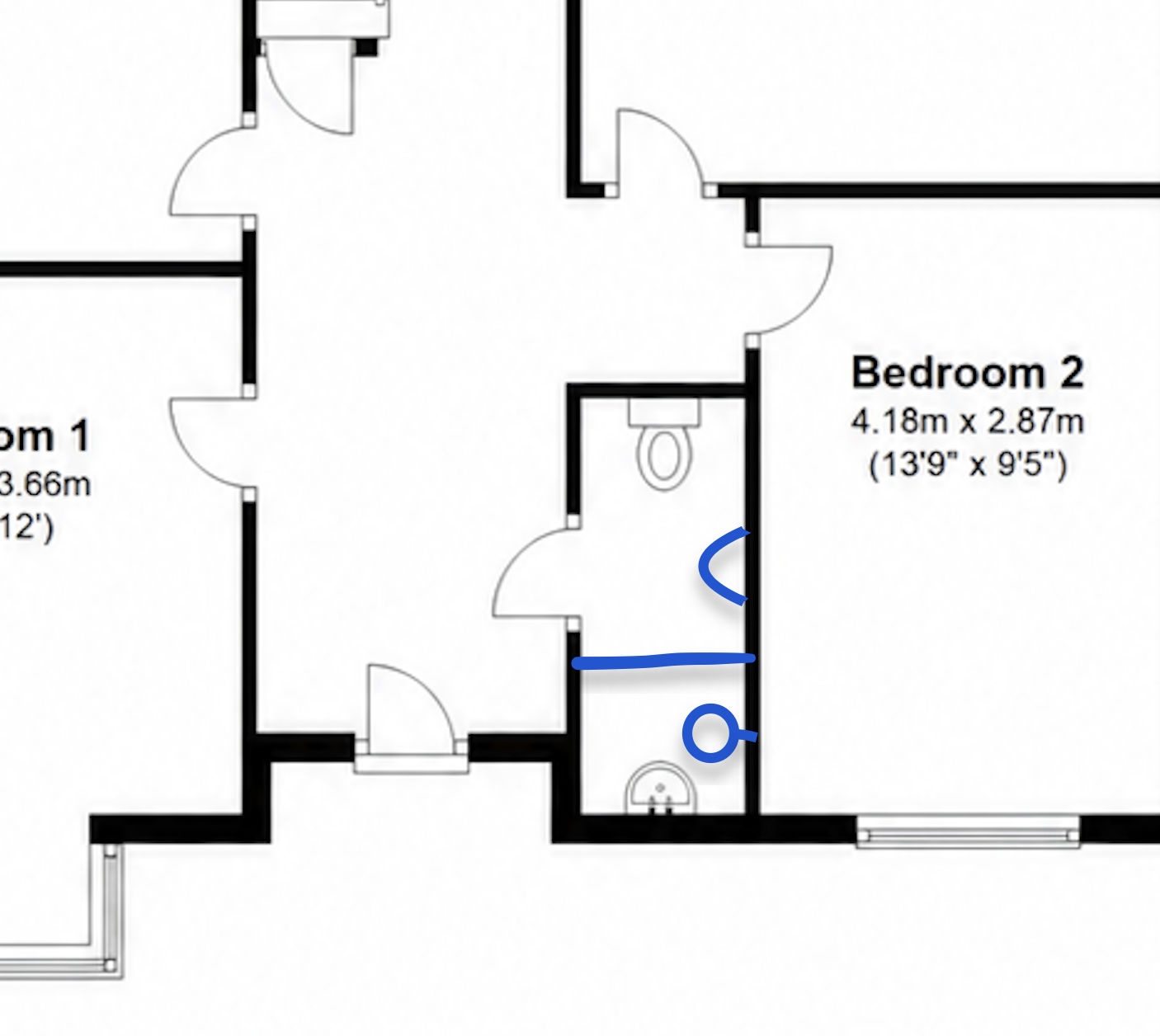
converting the existing WC into an additional communal shower room
The outcome
The council ultimately agreed to remove the requirement for the five additional wash hand basins.
The final licence conditions instead required the existing ground-floor WC to be converted into an additional shower room.
The council subsequently confirmed that the hand wash basin requirement would be removed from the final licence.
For us, this was a satisfactory outcome.
We had not simply refused to comply with a council request.
We had investigated the requirement, understood the applicable standards, gathered evidence, listened to the tenants, considered the practical implications and used the formal process available to us.
Could we have held firm on the suitability of the existing provisions? Possibly.
But we were also confident that our proposed solution would enhance the existing amenity provision for the tenants, whilst also adding capital value to the property.
For us, this was a practical resolution that achieved a better outcome than simply installing five additional hand wash basins.
What did we learn
After managing approximately 55 HMO licence renewals, this remains the only occasion where we have needed to make a formal representation against a council requirement.
That is important context.
Most of the things a council inspector asks you to address will be perfectly reasonable.
If something needs fixing, fix it.
The purpose of an HMO inspection is ultimately to ensure that properties are safe, suitable and properly maintained for the people living in them.
But that doesn't mean that every requirement should automatically be accepted without question.
Occasionally, there may be a genuine difference between:
“I don't think this is necessary.”
and
“I'm not sure this requirement is supported by the applicable standards in these particular circumstances.”
Those are very different positions.
The first is simply an opinion.
The second can be investigated, evidenced and, where appropriate, formally challenged.
The bigger lesson for HMO landlords
A professional HMO landlord doesn't need to know every regulation by heart.
But they do need to know when to ask questions.
When a council requirement is raised, the first response shouldn't be defensiveness — but neither should it necessarily be immediate acceptance.
Ask:
What is the legal or regulatory basis for this requirement?
What do the published amenity standards say?
How do those standards apply to this particular property?
Is the requirement reasonably practicable?
What evidence supports the proposed work?
And, where appropriate:
What do the tenants actually think?
In our experience, formal challenges are rare.
But knowing that the process exists — and knowing how to use it properly when there is a genuine basis for doing so — is an important part of professionally managing an HMO portfolio.
Facing an HMO compliance challenge?
If you're facing a difficult HMO licensing or amenity-standard issue — whether during an existing licence renewal or while setting up a new HMO — you don't necessarily have to work it out alone.
We provide Complex Case Resolution support for landlords facing challenging compliance issues, as well as HMO Set-Up consultancy and project support for landlords creating or reconfiguring HMO properties.
Have a situation you'd like to talk through?
Book an obligation-free 15-minute call with us to tell us about your property and the challenge you're facing, and we'll explore how we may be able to help.
More than just lettings and management